Before buying a used record, check the disc, sleeve, price, pressing clues, completeness, and your reason for wanting it. Look for warps, scratches, groove wear, spindle marks, seam splits, writing, water damage, smoke smell, missing inserts, and mismatched discs. If the record is expensive, confirm the exact pressing before you pay.
This checklist uses Discogs grading language, Discogs identifier guidance, and Library of Congress handling basics.
Crate digging rewards speed, but bad speed fills shelves with noisy placeholders and almost-right pressings.
A checklist doesn't kill the fun. It keeps the fun from getting expensive in the wrong way.
What should you check on the record itself?
Tilt the disc under light. Look for scratches, scuffs, cloudy patches, groove wear, warps, edge chips, and spindle marks. A feelable scratch deserves caution, especially on a quiet album.
Check that the disc matches the sleeve and label. Wrong-disc swaps happen. So do mixed-up multi-LP sets.
What sleeve problems matter?
Check seam splits, ring wear, writing, water stains, cut corners, stickers, tears, missing inserts, and smoke or mildew smell. Some flaws are cosmetic. Water and mold are different problems.
Original inner sleeves, posters, booklets, and hype stickers can matter for value. If the copy is priced high, completeness should be part of the decision.
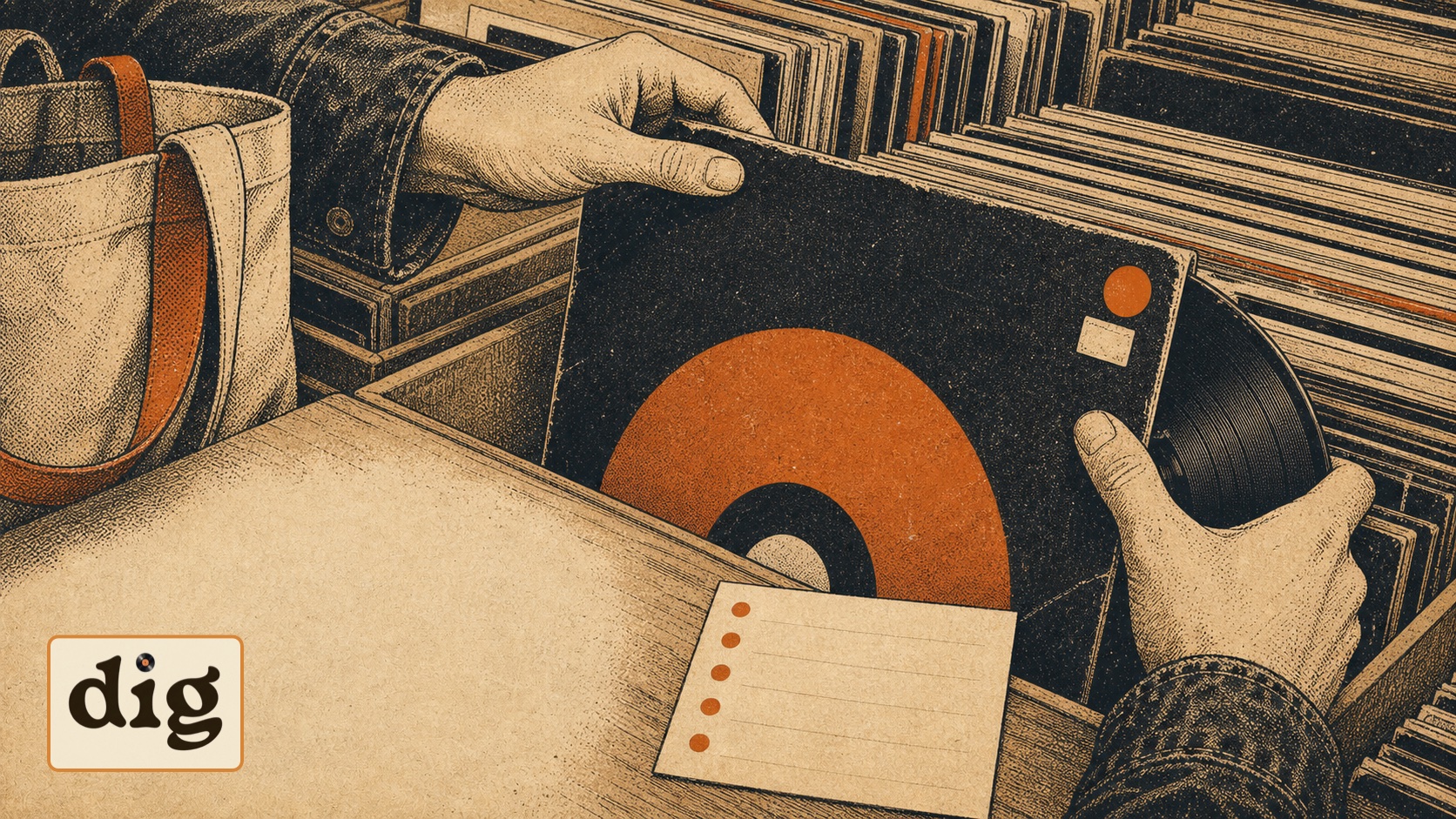
When should you research before buying?
Research before buying when the price feels high, the artist has many pressings, the record is often counterfeited, or the seller is claiming first pressing, promo, import, or rare variant.
For cheap records, the question is simpler: Will you play it, gift it, sample it, or enjoy owning it? If not, leave it for the next person.
dig turns the checklist into a shop habit. Search your collection before buying, check the wishlist, scan the barcode or cover, and save condition notes before the record becomes shelf blur.
- Check if you already own a copy.
- Use wishlist notes so wanted records do not depend on memory.
- Add store, price, and condition notes while the copy is still fresh.
FAQ
Should I buy a record with a scratch?
Only if the price, rarity, and your tolerance make sense. Feelable scratches can cause clicks or skips, so be careful on expensive copies.
Does a sealed used record guarantee condition?
No. Sealed records can be warped, mispressed, or damaged under shrink. Sealed is a condition clue, not proof.
What should I bring to a record store?
Bring your wantlist, a budget, patience, and enough catalog access to avoid buying duplicates by accident.
Let the shelf do more than sit there.
dig keeps cataloging, value notes, wishlist decisions, and the next record to play in one place.
Join the waitlist