Grade vinyl by separating media condition from sleeve condition, then describing what you can see and hear. Mint should be rare. Near Mint means almost no visible wear. VG+ allows light cosmetic marks that do not dominate playback. VG means more visible wear and audible surface noise. Always add notes for scratches, warps, writing, splits, and playback issues.
This guide follows Discogs marketplace grading language and Library of Congress handling guidance.
Condition is where record deals either stay friendly or turn weird. Two people can agree on the album and still disagree hard on the copy.
The fix is to grade the media and sleeve separately, describe defects plainly, and avoid heroic grades. A conservative grade ages better than a flattering one.
What do vinyl grades mean?
Discogs uses the Goldmine Standard for marketplace grading. Mint is the top grade and should be used sparingly. Near Mint is a nearly perfect copy. VG+ shows light signs of careful use. VG has more obvious wear and audible surface noise but should still be playable.
Good, Fair, and Poor aren't polite ways to say cheap. They signal heavy flaws. Use them when the copy is a placeholder, a rare artifact, or a project record.
Why should media and sleeve get separate grades?
A clean disc can live in a tired jacket, and a beautiful sleeve can hide a noisy record. Separate grades prevent that confusion. Write the media grade first, then sleeve grade: VG+ / VG, NM / VG+, and so on.
Add notes for splits, ring wear, writing, cut corners, missing inserts, warped discs, feelable scratches, and skips. The note often matters more than the grade.
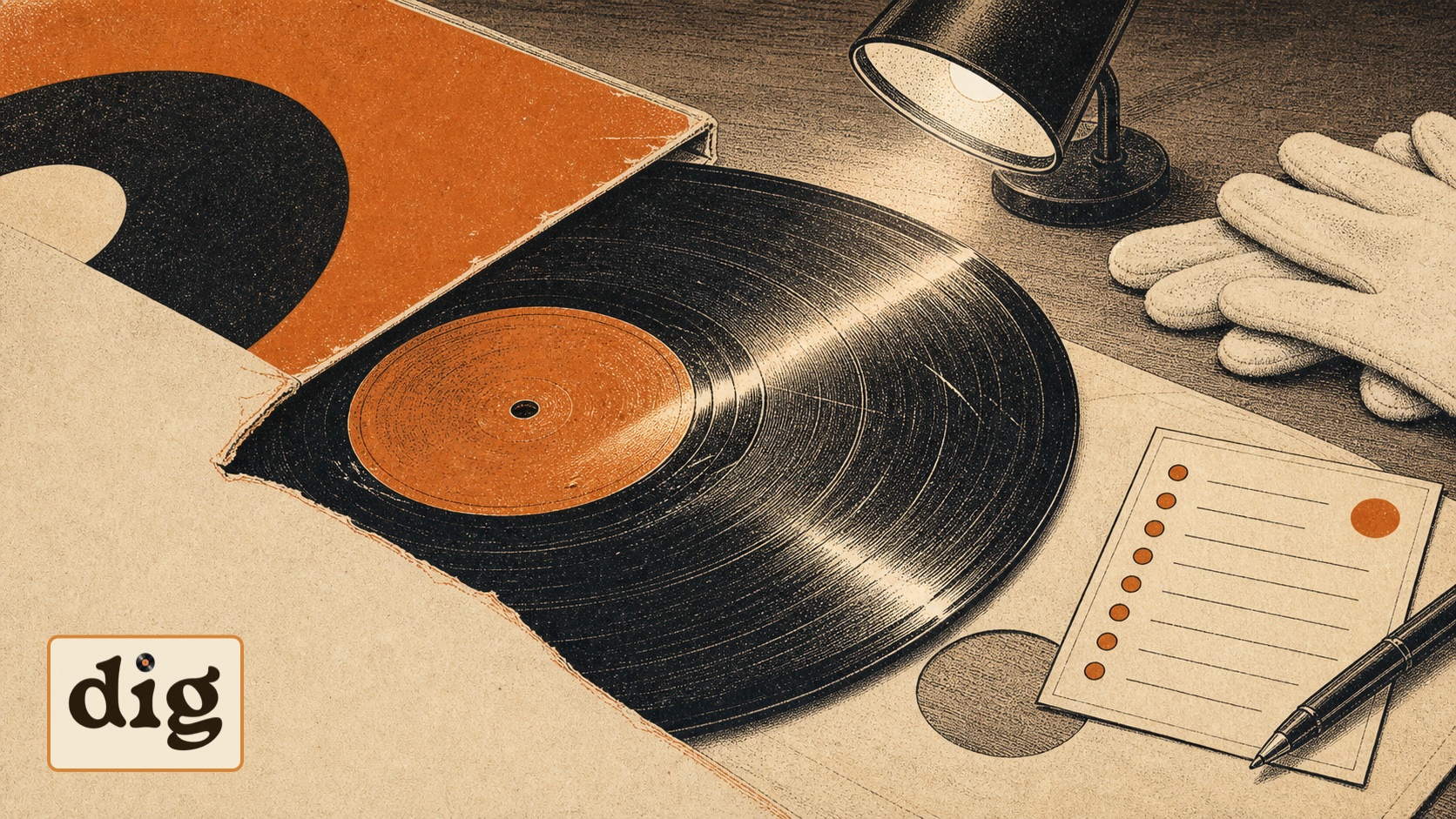
When should you play grade?
Play grade when the record is valuable, visually questionable, or likely to sell. Visual grading catches marks; playback catches noise, distortion, groove wear, and skips.
Handle the disc by the edges and label area, then clean dust before testing. Bad handling during grading is a tragic little self-own.
dig keeps condition with the exact record, which matters when you own duplicates, sell a copy, insure a collection, or want to know which albums need cleaner upgrades.
- Store media and sleeve condition as part of the record entry.
- Add notes for skips, ring wear, seam splits, and cleaning needs.
- Use value context without forgetting that condition drives price.
FAQ
Should sealed records be graded Mint?
Sealed records can have hidden defects. Many collectors still avoid Mint unless the record is known to be perfect. Sealed is a useful note, not a full condition report.
What is the difference between VG and VG+?
VG+ usually has light wear that doesn't dominate playback. VG has more obvious defects, audible noise, and visible wear, though it should still play through.
Should I grade the inner sleeve?
Mention the inner sleeve when it's original, printed, damaged, missing, or part of the value. Generic replacement sleeves usually need less detail.
Let the shelf do more than sit there.
dig keeps cataloging, value notes, wishlist decisions, and the next record to play in one place.
Join the waitlist