Clean vinyl records gently and only with methods meant for grooved discs. Handle records by the edge and label, remove loose dust before playback, keep the turntable and stylus clean, and avoid household cleaners, paper towels, and soaking labels. If a record has mold, residue, or severe contamination, separate it from clean copies until you know how to treat it.
This guide uses Library of Congress care guidance for grooved discs and connects cleaning notes back to collector cataloging.
A dirty record isn't just noisy. It carries grit into the groove, onto the stylus, and into the next record you play.
Cleaning doesn't need to become a lab ritual for every copy. The trick is knowing what's routine dust, what needs a proper wash, and what should be quarantined until you have a plan.
What should you do before cleaning a record?
Handle the disc by the edge and label area. Inspect both sides under decent light. Look for loose dust, fingerprints, mold, residue, feelable scratches, warps, and label damage.
Don't rush straight to liquid. Loose grit should come off before any wet cleaning so you're not dragging it through the groove.
What is safe for routine cleaning?
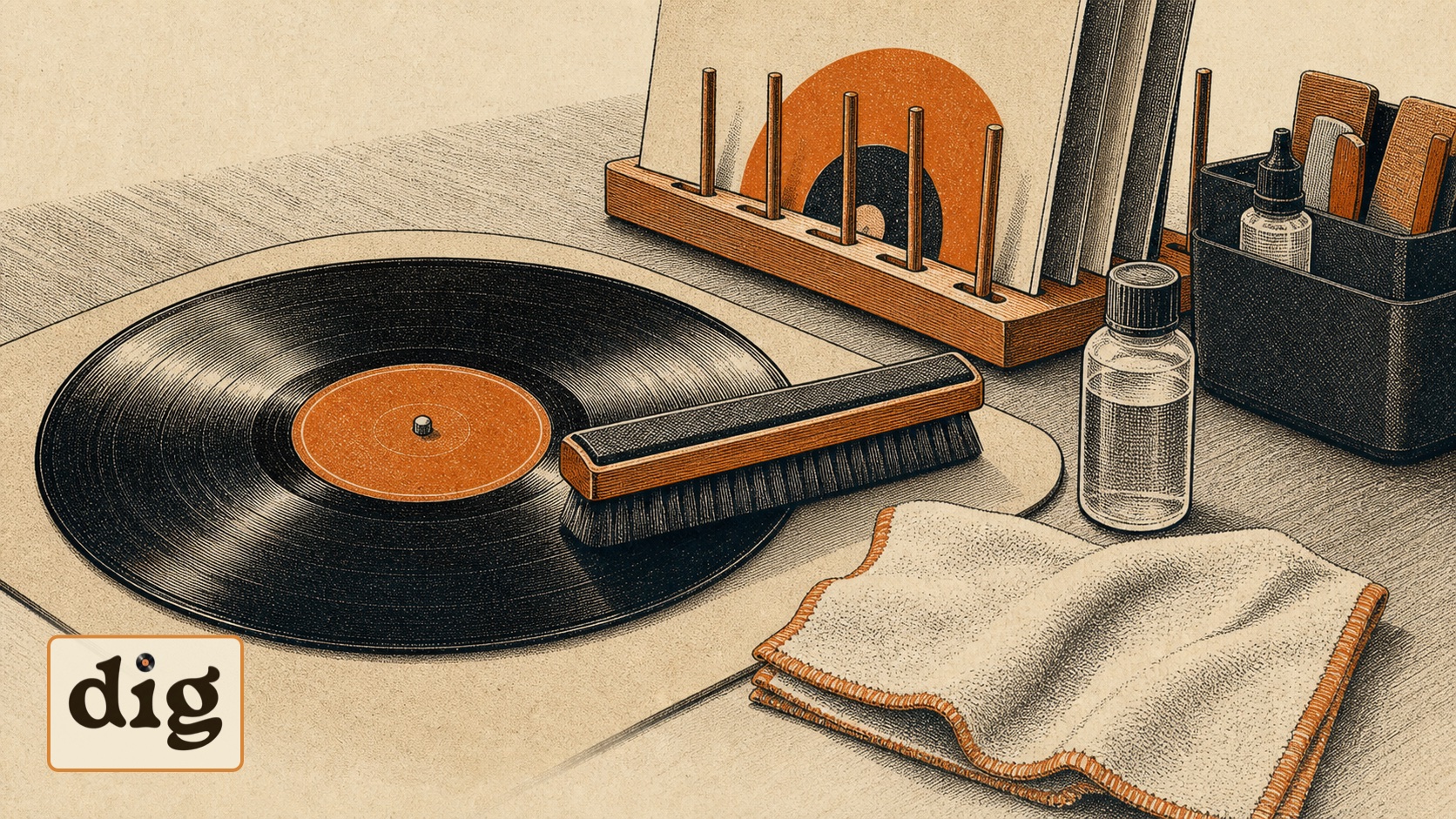
For basic dust, use tools made for records and follow their instructions. Keep the stylus and platter clean too, because a clean disc played on dirty gear is a half-finished job.
The Library of Congress recommends canned air for dust on grooved and optical discs. Home collectors often use record brushes and wet systems, but those should be record-specific and used with care.
What should you avoid when cleaning vinyl?
Avoid paper towels, household sprays, alcohol-heavy guesses, abrasive cloths, and soaking the label. Avoid playing a moldy or gritty record to see what happens. That experiment is unfair to the stylus.
When a record needs special treatment, note the issue, store it separately, and clean it before filing it back with healthy copies.
dig condition notes turn cleaning from a vague intention into a findable task. Mark noisy, dusty, warped, or cleaned records so the collection tells you what still needs attention.
- Tag records that need cleaning before the next play.
- Add notes after a successful clean or play grade.
- Use condition notes when choosing a copy to sell, trade, or upgrade.
FAQ
Should every used record be cleaned before playing?
A quick inspection should happen every time. Clean dusty or unknown used records before playing, especially if they came from a thrift bin, garage, basement, or smoky room.
Can cleaning fix scratches?
No. Cleaning can remove dust, debris, and some residue. It can't repair groove damage or deep scratches.
Should moldy records stay with the collection?
Keep moldy or contaminated records separate until cleaned or evaluated. Do not slide them into clean sleeves next to clean records.
Let the shelf do more than sit there.
dig keeps cataloging, value notes, wishlist decisions, and the next record to play in one place.
Join the waitlist