Store vinyl records upright, supported, and away from heat, direct light, leaks, and humidity swings. Use sturdy shelving, avoid tight overstuffing, separate different disc sizes, and support sleeves with dividers. For home collections, the Library of Congress recommends cool, relatively dry, clean, stable storage rather than attics, basements, radiators, or vents.
This guide follows Library of Congress preservation guidance for handling and storing grooved discs.
Storage advice gets treated like furniture advice until a shelf bows or a crate leans for two years. Records are heavy, flat, and easy to deform when the room fights back.
A good setup does three jobs: it protects the disc, protects the sleeve, and lets you find the album without pulling half the shelf apart.
Should vinyl records be stored upright?
Yes. Store records upright like books, with enough support that they don't lean hard to one side. The Library of Congress recommends storing grooved discs on edge and using dividers that support the sleeve face.
Avoid horizontal stacks for long-term storage. Weight plus time can warp sleeves, stress discs, and make the bottom records a chore to reach.
Where should records live in a room?
Pick a clean, stable spot away from radiators, vents, windows, and leak-prone walls. Avoid attics and basements when they swing hot, damp, or dusty.
Sunlight fades jackets and heat can deform vinyl. If a spot feels rough on paper, plants, or wood furniture, it's probably rough on records too.
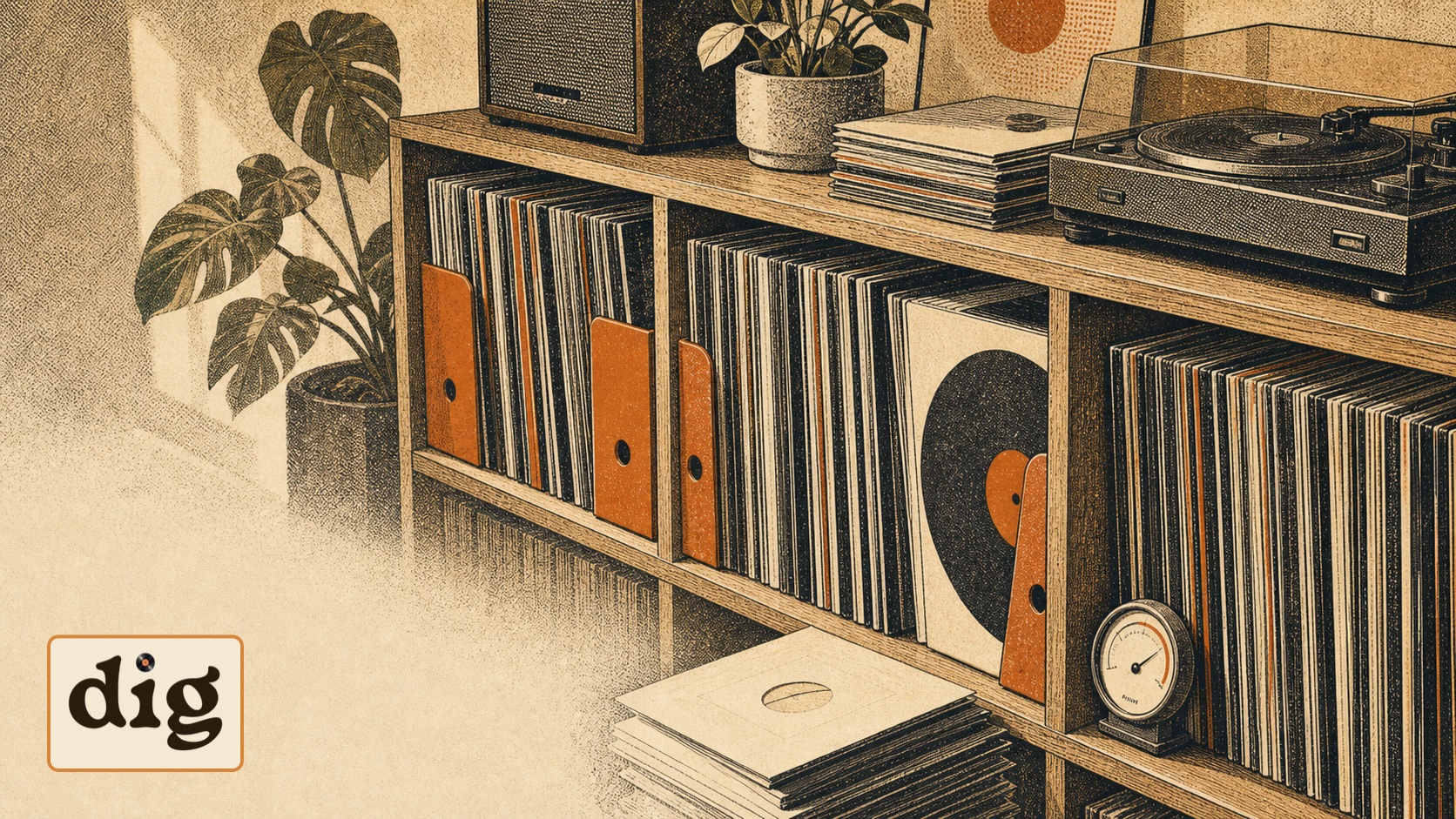
What shelving works for record collections?
Use shelves that can handle concentrated weight. The Library of Congress notes that grooved discs can average 35+ pounds per shelf-foot, which is enough to expose weak furniture fast.
Leave enough room to slide records without forcing them. A shelf packed to the last centimeter invites seam splits, bent corners, and lazy reshelving.
dig location notes help when the collection spreads from one shelf to crates, overflow boxes, and storage. The catalog should say where a record lives, not only that you own it.
- Track shelf, crate, room, or box location.
- Mark overflow and storage copies so they do not disappear.
- Use search before digging through the wrong shelf.
FAQ
Can records be stored flat?
Flat storage is fine for a short handling moment, but it's a bad long-term plan. Upright storage with support is safer for discs and sleeves.
Do outer sleeves matter?
Outer sleeves help protect jackets from shelf rub, dust, and ring wear. They don't solve heat, moisture, or bad shelf support.
How much space should I leave on a shelf?
Leave enough space to remove records without force while keeping them upright. If every pull bends a corner, the shelf is too tight.
Let the shelf do more than sit there.
dig keeps cataloging, value notes, wishlist decisions, and the next record to play in one place.
Join the waitlist