Organize vinyl records by the system you will maintain: alphabetical for fast lookup, genre for browsing, label for collectors, mood for listening, or crates for active rotation. Track location in your catalog so the physical shelf and digital search agree. A good system makes records easier to find and easier to play.
This guide uses preservation storage guidance and release metadata concepts while staying focused on everyday home collections.
Organization is personal until someone asks where a record is and you start opening every cube like a detective with bad notes.
The best system matches how you look for music. Some collectors think in alphabet. Some think in scenes, labels, moods, decades, or recent obsessions.
What is the best way to organize records?
Alphabetical organization is the easiest for lookup. Genre makes browsing feel natural. Label and catalog-number systems suit collectors who follow scenes or imprints. A recent-listening crate keeps the current rotation close.
Any system works until it becomes hard to maintain. If new records sit in a pile for weeks, the system is too precious.
Why should location be in the catalog?
Physical organization and digital cataloging should agree. If a record lives in the jazz shelf, overflow crate, upstairs box, or sell pile, the catalog should say so.
Location matters more as the collection spreads. One shelf can survive memory. Three rooms can't.
Do dividers help?
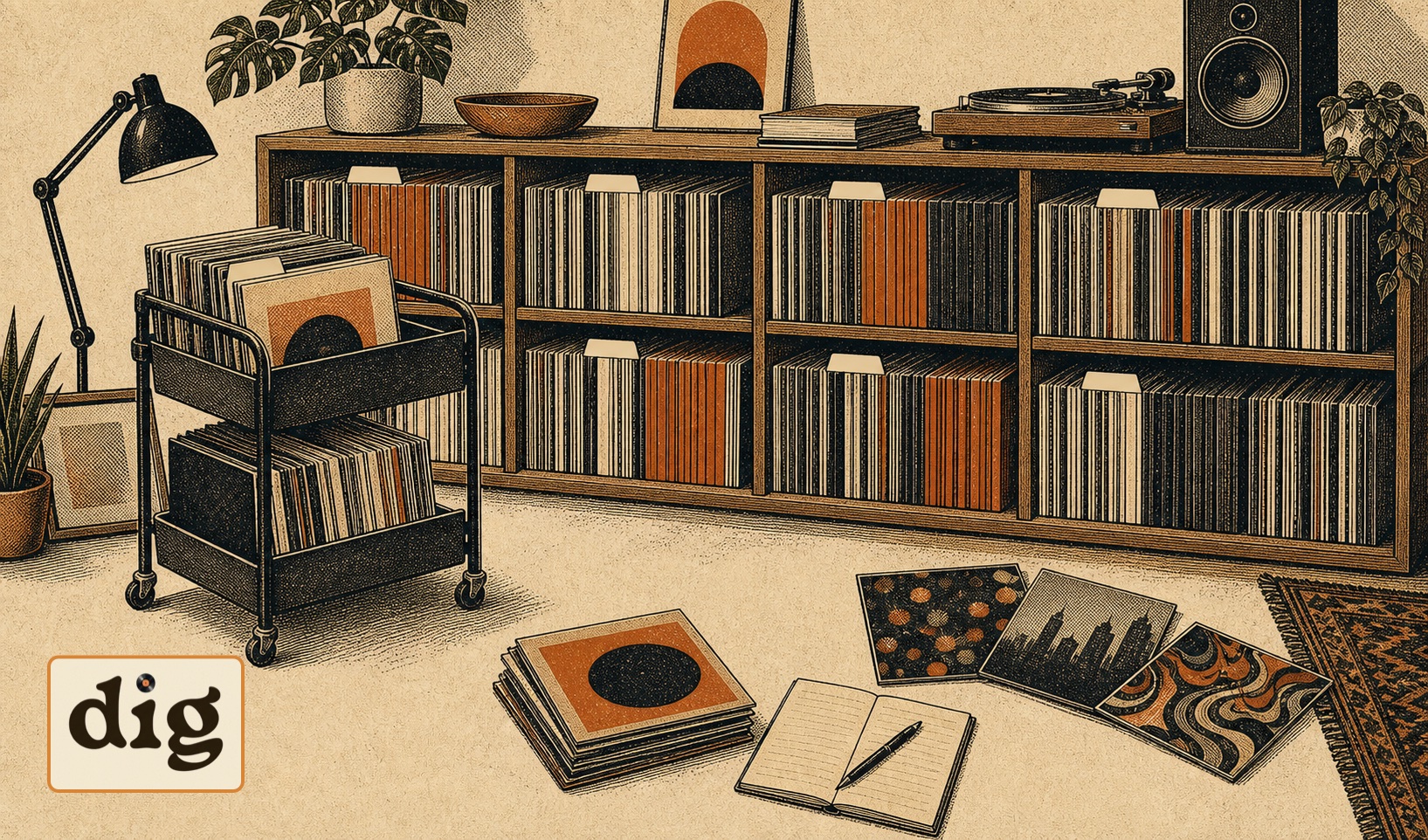
Dividers help if they support the browsing system without squeezing records. The Library of Congress recommends sturdy dividers for grooved discs in storage because they support the sleeve face.
Use dividers for alphabet ranges, genres, recent pickups, sell/trade, and cleaning queue. Keep them simple enough that you use them.
dig lets the catalog support the shelf. Use search, location notes, ownership status, wishlist, and value context so organization works even when the physical system changes.
- Add shelf, crate, room, or box location.
- Keep sold, traded, wishlist, and owned records separate.
- Use search when browsing memory fails.
FAQ
Should records be organized by artist or genre?
Use artist if lookup matters most. Use genre if browsing matters most. Many collectors use genre sections with artists alphabetized inside each section.
Where should new arrivals go?
Create a short new-arrivals section for cleaning, listening, and cataloging. Move records into the main shelf after that first pass.
How do I organize box sets and odd sizes?
Keep box sets where they fit safely, then track location in the catalog. Do not force odd formats into a shelf that damages them.
Let the shelf do more than sit there.
dig keeps cataloging, value notes, wishlist decisions, and the next record to play in one place.
Join the waitlist