To value a vinyl record collection, identify the exact copy, grade media and sleeve condition, separate common records from scarce or high-demand records, and compare recent sales or marketplace context for the same pressing. Do not multiply the number of records by a flat price. Condition, version, demand, and completeness drive value.
This guide uses Discogs grading language and release-identification sources so value is attached to the copy, not only the album title.
A collection value can feel flattering until you try to sell, insure, or explain it. Then the average-per-record shortcut falls apart.
Value lives at the copy level. Pressing, condition, completeness, demand, and timing all matter. The catalog is where those facts either stay useful or vanish.
Why does exact pressing matter for value?
Two copies of the same album can sell very differently. A common reissue, a clean early pressing, a promo copy, and a colored variant should not share one value note.
Use release identifiers such as barcode, catalog number, label, country, year, and runout notes where needed. The closer your record matches the market comparison, the less you're guessing.
How does condition change value?
Condition is the biggest reality check. A VG copy of a desirable record may still matter, but it should not borrow the price of a Near Mint copy. Sleeve damage, missing inserts, writing, warps, skips, and feelable scratches all affect value.
Use separate media and sleeve grades, then add a note that explains the grade. Future you won't remember which VG+ had the corner cut.
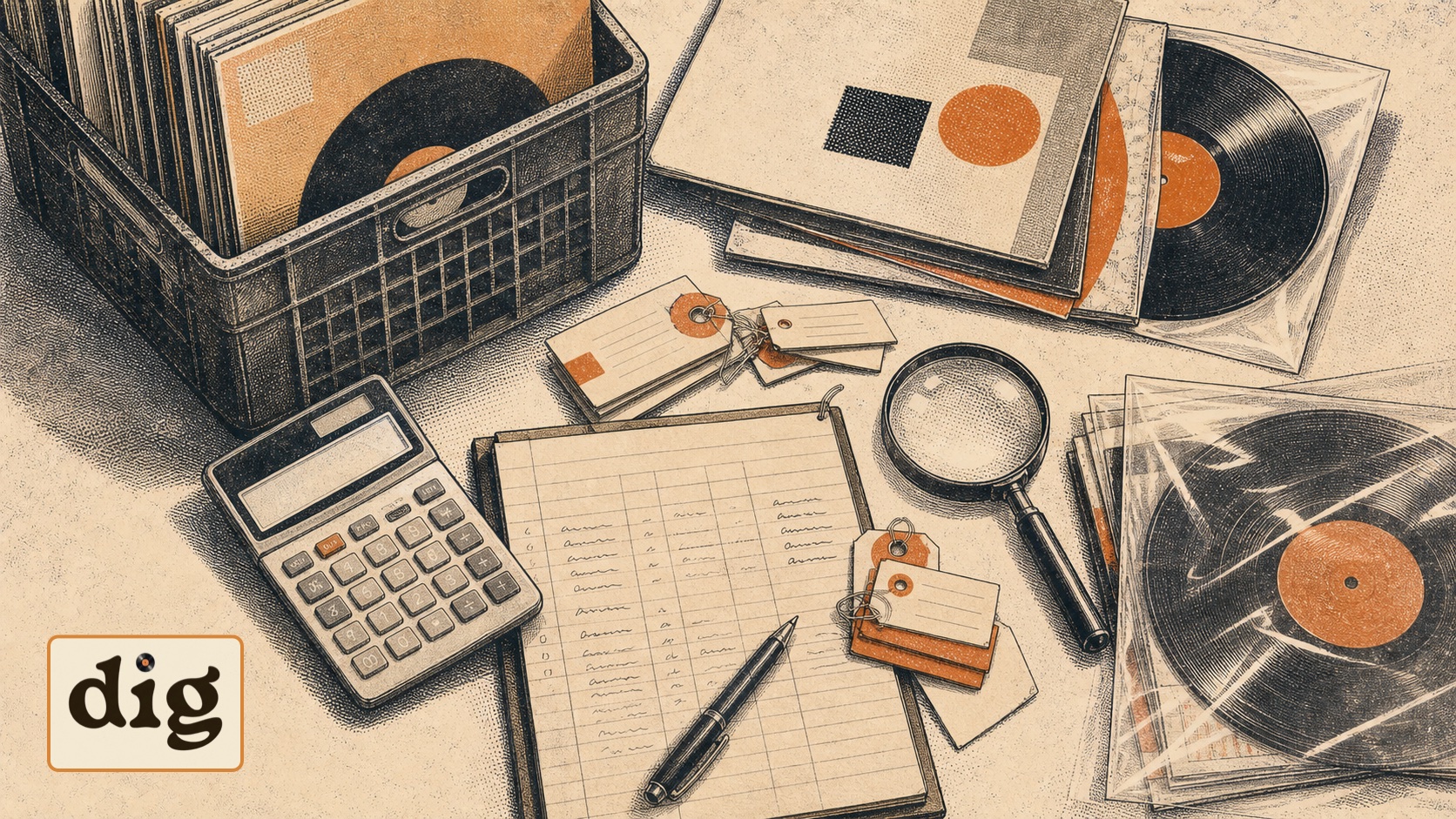
Which records should you value first?
Start with likely outliers: rare pressings, imports, small-label releases, sealed copies, audiophile editions, signed records, promos, and albums you know collectors chase.
Then value the middle of the shelf in batches. The goal isn't perfect appraisal on day one. It's a collection value that gets less wrong over time.
dig keeps value context near condition and pressing data, which is where it belongs. That makes collection worth useful for insurance, selling, trade decisions, and spotting which records deserve more research.
- Attach estimated value to the specific copy.
- Use condition and pressing notes beside value.
- Find high-value records without rebuilding a spreadsheet.
FAQ
Can I value a collection by record count?
No. Record count is too blunt. One rare clean LP can outweigh several crates of common worn records.
Should sentimental value go in the same number?
Keep sentimental notes separate from market value. Both matter, but mixing them makes the estimate confusing.
How often should collection values be updated?
Update high-value and sellable records when market context changes. Common records can be reviewed less often.
Let the shelf do more than sit there.
dig keeps cataloging, value notes, wishlist decisions, and the next record to play in one place.
Join the waitlist