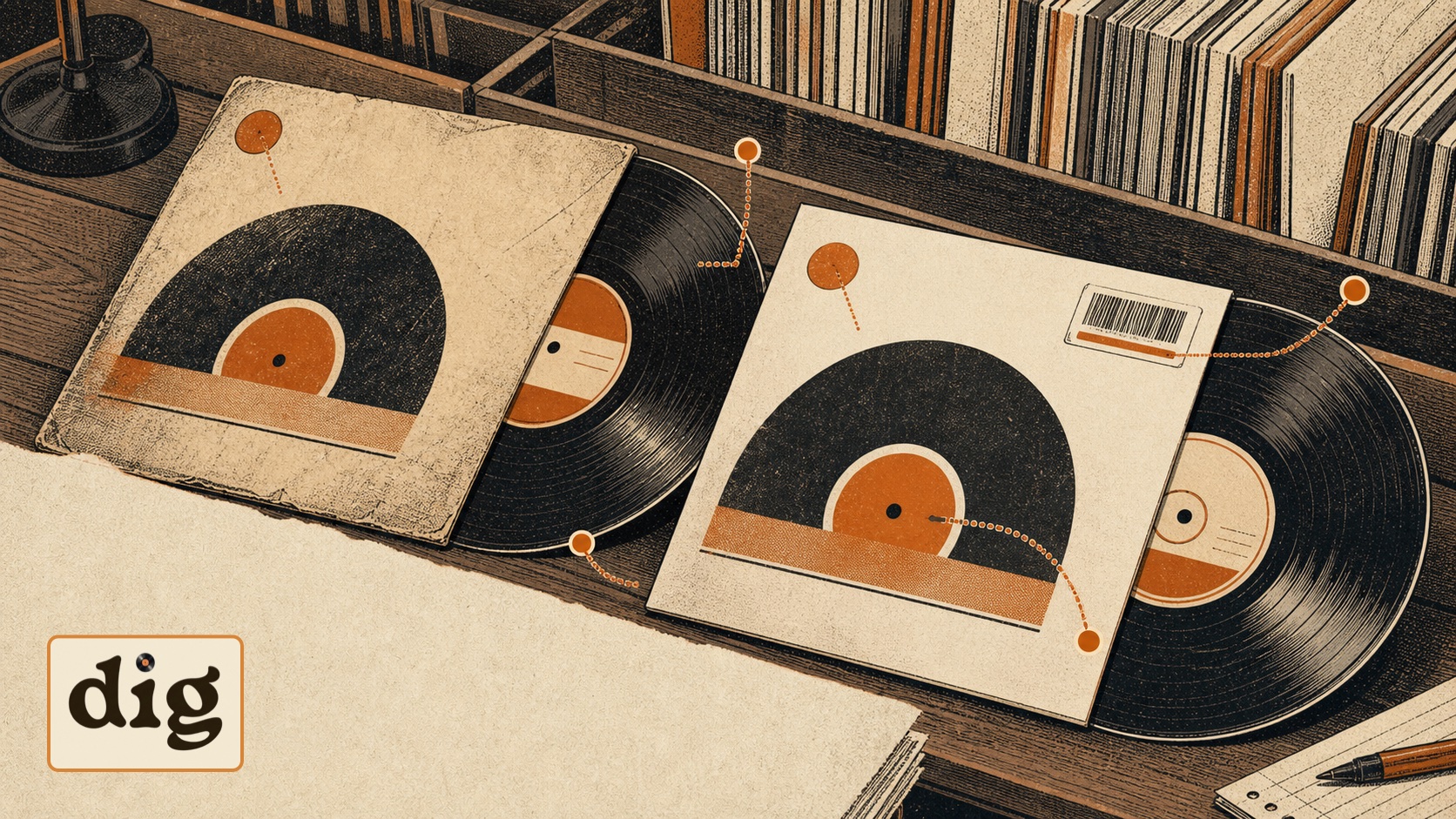
A first pressing is an early copy from an album's first release run; a reissue is a later release of the same album, often with different packaging, catalog numbers, labels, barcodes, or runout marks. To compare them, check country, label, catalog number, barcode, jacket details, center labels, and matrix/runout data together.
This guide uses MusicBrainz release terminology and Discogs identifier guidance for a practical collector workflow.
The phrase "first pressing" gets thrown around too fast. Sellers use it, friends repeat it, and listings blur first pressing, early pressing, repress, and reissue into one muddy claim.
The useful move is the slower one: compare evidence. A record is a physical package of labels, sleeves, barcodes, catalog numbers, and runouts, and the copy in your hand has to line up with the version you think it is.
What is the difference between a first pressing and a reissue?
A first pressing belongs to the first manufacturing window for a release. A reissue is a later release of the same album, often made years later by the same label or a different one. A repress can share much of the original setup but come from a later manufacturing run.
MusicBrainz describes a release as a distinct issuing of a product. That framing helps: you're not identifying the album idea, you're identifying the issued object.
What clues should you check first?
Start with the easy clues: country, label, catalog number, barcode, copyright text, jacket printer, inner sleeve, hype sticker, and center-label design. Then check runout data if the copy is valuable or confusing.
Barcodes are especially useful for ruling out older claims. Discogs notes that releases with barcodes generally can't predate 1979, which kills a bad first-pressing listing fast.
Are reissues worse than first pressings?
No. Reissues can sound excellent, include cleaner vinyl, restore artwork, or put expensive records within reach. A first pressing is a collecting detail, not a guarantee that the copy is better for listening.
Buy for the reason you care about: sound, history, artwork, price, scarcity, or nostalgia. The catalog should capture which reason applied so the shelf makes sense later.
dig earns its place when a record has multiple tempting versions. Add the copy you own with the barcode, label photo, value context, and notes so first-pressing claims don't get flattened into one album entry.
- Keep multiple pressings separate instead of merging by artist and title.
- Attach value notes to the exact version you own.
- Use wishlist entries for the pressing you still want, not only the album name.
FAQ
Is a first pressing always more valuable?
No. Artist demand, condition, scarcity, country, label, mastering, and collector taste all matter. A damaged first pressing can be worth less than a clean reissue.
Can a barcode prove a record is not original?
Often, yes for older LPs. Barcodes became common later, so a barcode on a record advertised as a 1960s first pressing is a warning sign unless the barcode is on an added sticker or later sleeve.
What should I catalog for a reissue?
Catalog the same core fields: artist, title, format, label, country, year, catalog number, barcode, condition, and notes for hype stickers or special mastering.
Let the shelf do more than sit there.
dig keeps cataloging, value notes, wishlist decisions, and the next record to play in one place.
Join the waitlist