At a record fair, bring a focused wishlist, set a budget, inspect condition under light, check pressing clues on expensive records, and leave room for surprise finds. Do not buy every almost-copy. Track what you already own, what you want, and what price makes sense before the room gets loud.
This guide combines Discogs grading and identifier guidance with practical collection-management habits.
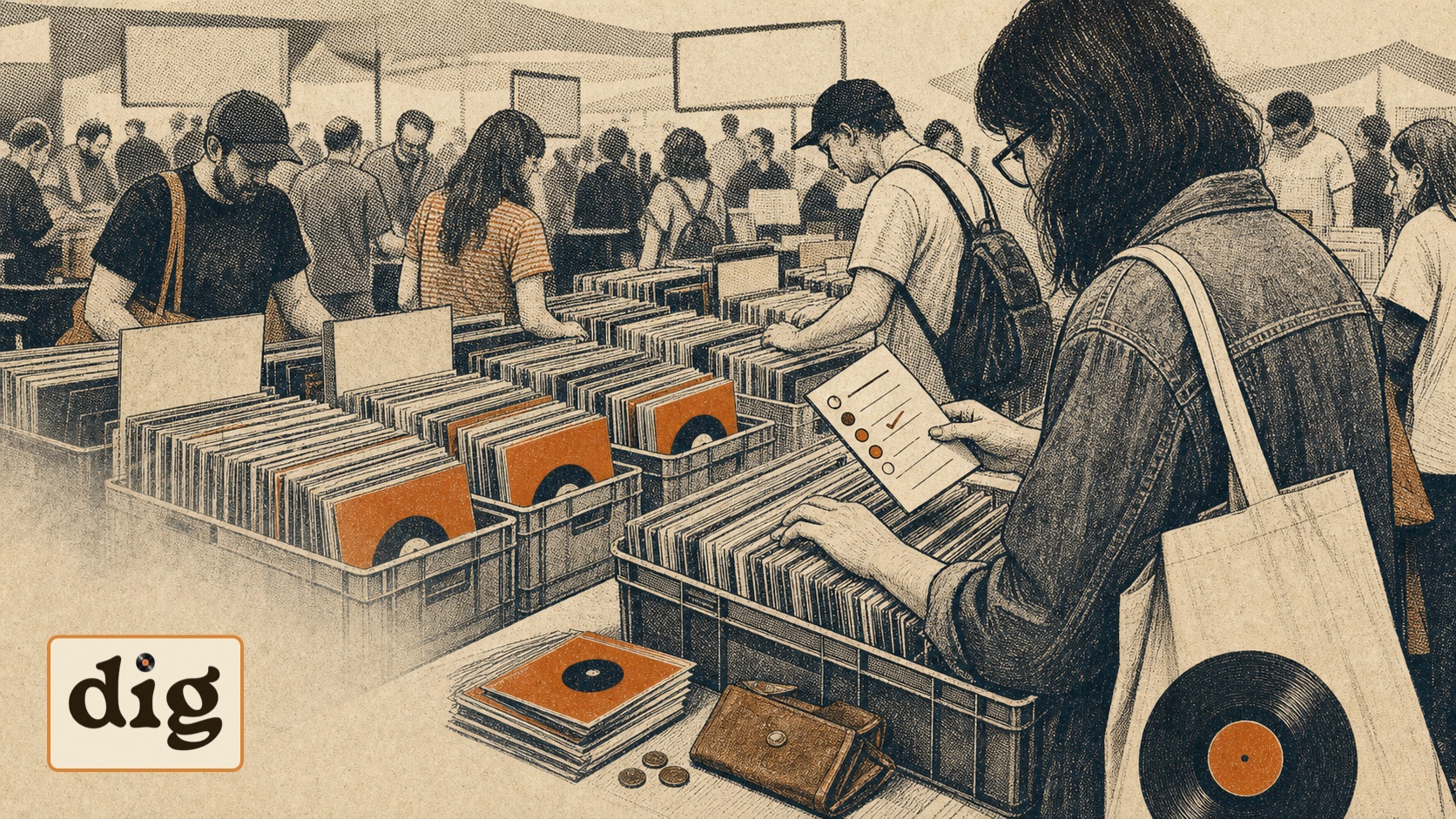
A record fair can turn a sensible collector into a person carrying twelve records they didn't plan to buy and one tote strap fighting for its life.
The way through is a light plan. Enough structure to avoid mistakes, enough looseness to let the bins surprise you.
What should you do before a record fair?
Pick a budget and a short wishlist. Mark priority records, acceptable reissues, condition minimums, and prices where you would walk away.
Check your collection for albums you already own but want to upgrade. A fair is a good place to replace a noisy copy, but only if you know which copy is noisy.
How should you inspect records at a fair?
Inspect the disc and sleeve before negotiating. Check warps, scratches, groove wear, seam splits, writing, inserts, and whether the disc matches the sleeve.
For expensive records, check catalog number, barcode, label, country, and runout clues. If a booth is too dark to inspect a pricey copy, pause.
What should you do after the fair?
Log purchases while the story is fresh: seller, price, condition, location, and why you bought it. Clean used records before they go into the main shelf.
Remove bought items from your wishlist and add upgrade notes for copies you passed on. That keeps the next fair from repeating the same search.
dig helps at the fair because the phone is already in your hand. Use collection search to avoid duplicates, wishlist notes to stay focused, and scan tools when a barcode, cover, or label can identify a copy quickly.
- Search your owned collection before buying.
- Keep priority wishlist notes with acceptable prices.
- Add pickups and condition notes before the tote gets unpacked.
FAQ
Should I haggle at record fairs?
It depends on the seller and price. Be polite, bundle when it makes sense, and don't treat a fair like a combat sport.
What records should I inspect most closely?
Inspect expensive records, visually marked records, older pressings, imports, promos, and any copy where condition is the reason to buy.
How do I avoid overspending?
Set a budget before entering, then keep a short high-priority list. Leave room for one surprise record, not ten.
Let the shelf do more than sit there.
dig keeps cataloging, value notes, wishlist decisions, and the next record to play in one place.
Join the waitlist