To avoid duplicate records, search your collection before buying, track exact pressings, keep wishlist entries separate from owned copies, and decide what counts as a duplicate for you. Same album, different pressing may be intentional. Same worn copy bought twice is usually a catalog failure.
This guide uses MusicBrainz release concepts and Discogs identifier fields to separate albums from exact physical copies.
Every collector eventually finds the duplicate they didn't mean to buy. Sometimes it's funny. Sometimes it's a $42 reminder that memory isn't a database.
Duplicates aren't always bad. The trick is knowing the difference between an upgrade, a variant, a play copy, a gift copy, and a mistake.
What counts as a duplicate record?
A duplicate is any copy that repeats a role you already filled. Two pressings of the same album may be useful if one is a mono copy, a colored variant, a cleaner upgrade, or a sentimental copy.
The problem is accidental duplication: buying the same common pressing again because the catalog only says artist and title.
What fields prevent duplicate buys?
Track artist, title, format, ownership status, barcode, catalog number, label, country, year, and condition. Add runout notes for variants that are easy to confuse.
Ownership status matters. Owned, wishlist, sold, trade pile, and gift copy shouldn't look the same in a search result.
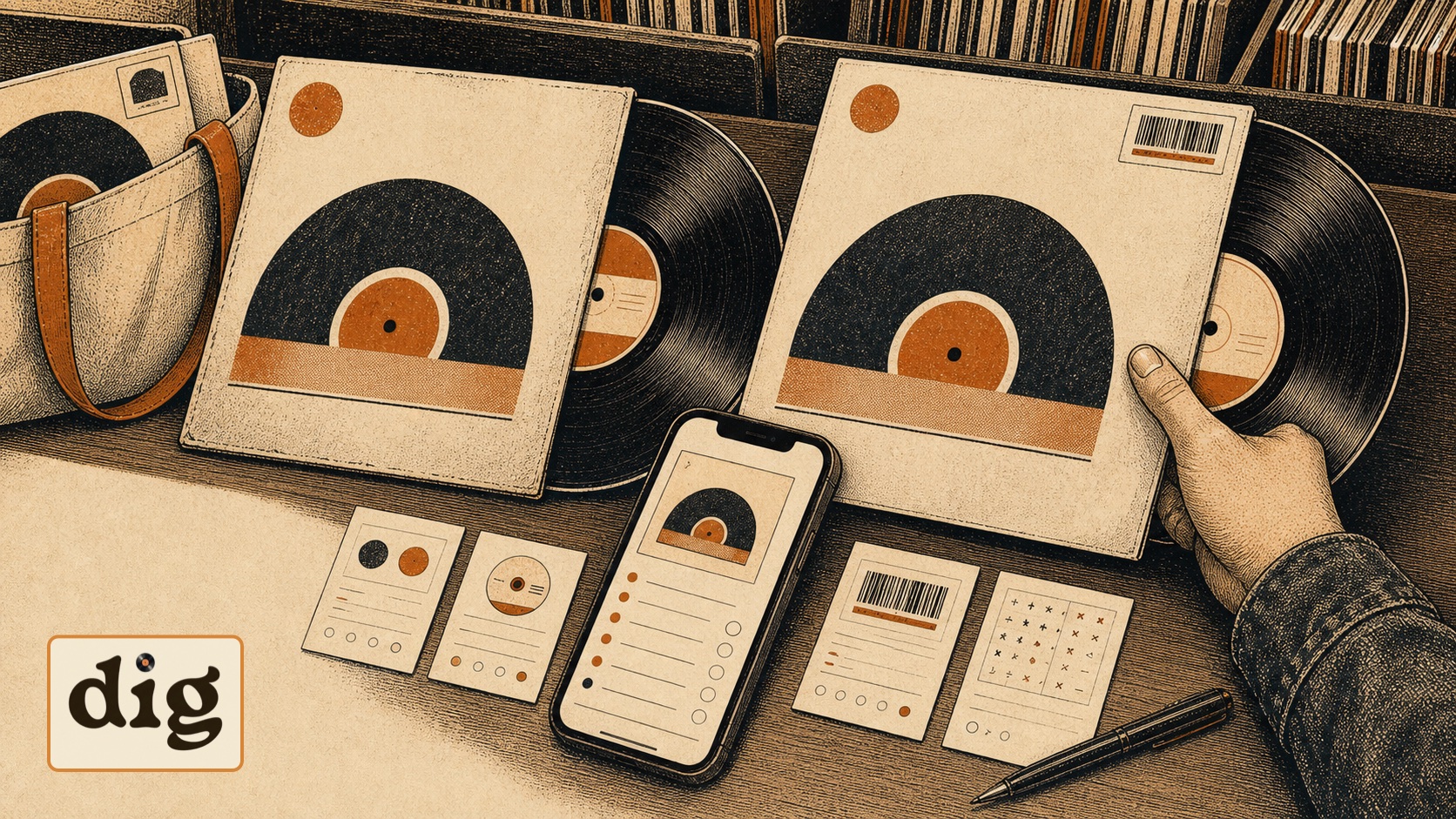
How do you check duplicates in a store?
Search before buying. If the record is cheap, artist and title may be enough. If it is expensive, match the barcode, label, catalog number, or other copy-level clues.
If you already own a worse copy, note that the new one is an upgrade. If you plan to sell the older copy, mark it before it disappears back into the shelf.
dig avoids duplicate confusion by treating exact copies seriously. Search the collection, scan the barcode or cover, and keep wishlist and owned records separate before you buy.
- Use exact Discogs/release IDs where available.
- Keep duplicate-prone albums tied to pressing and condition notes.
- Mark upgrades, trade copies, and wishlist entries clearly.
FAQ
Is owning multiple pressings bad?
No. Multiple pressings are part of collecting when they serve a purpose: sound, history, artwork, rarity, format, or sentiment.
What is the fastest duplicate check?
Search artist and title first. If the album appears, compare format, barcode, label, catalog number, country, year, and condition.
Should sold records stay in the catalog?
Yes, if you care about history or avoiding rebuying. Keep them separate from owned records so search stays honest.
Let the shelf do more than sit there.
dig keeps cataloging, value notes, wishlist decisions, and the next record to play in one place.
Join the waitlist